Lab Diamond Fluorescence Guide for B2B Buyers
Fluorescence is one of the most misunderstood characteristics in diamond buying. In natural diamonds, strong fluorescence is often treated as a defect that lowers value — despite the fact that it rarely affects appearance and sometimes improves it. In lab grown diamonds, the story is different: fluorescence is generally rare, typically faint when present, and almost never a cause for concern.
This guide explains what fluorescence is, how it is graded, and what B2B buyers should know about lab grown diamond grading and fluorescence.
Table of Contents
1. What Is Diamond Fluorescence?
Fluorescence is the visible glow a diamond emits when exposed to ultraviolet (UV) light. It is caused by trace elements or structural features in the crystal lattice that absorb UV radiation and re-emit it as visible light — typically blue, though yellow and white fluorescence also occur.
About 25-35% of natural diamonds exhibit some fluorescence. In lab grown diamonds, the percentage is much lower — perhaps 5-10% — because the controlled growth environment minimizes the structural causes of fluorescence.
2. Fluorescence Grading Scale
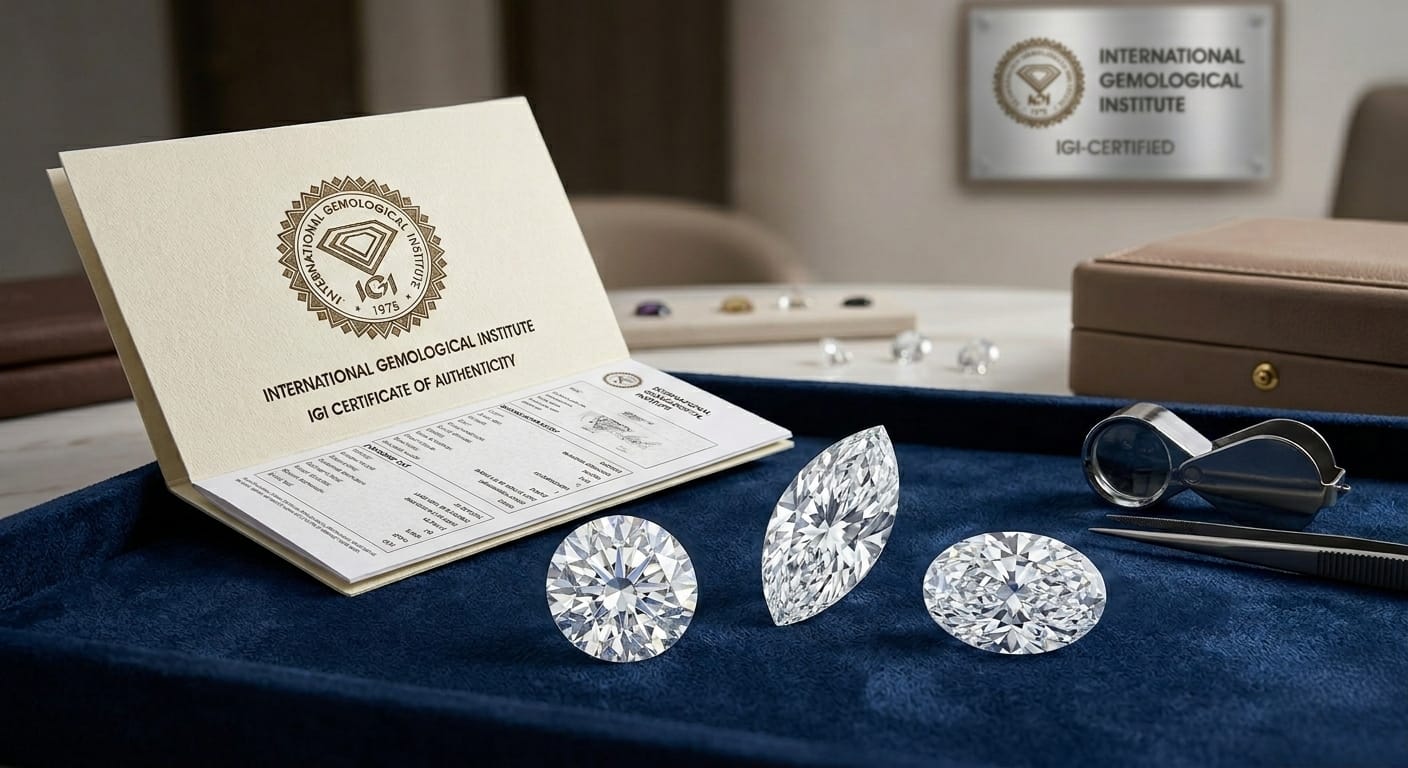
IGI and GIA use the same five-tier fluorescence scale:
| Grade | Description | What It Means |
|---|---|---|
| None | No fluorescence under UV light | Most common grade for lab grown diamonds. No effect on appearance. |
| Faint | Barely detectable glow | Not visible to the naked eye under any normal lighting. Zero impact on appearance or value. |
| Medium | Clearly visible glow under UV | Uncommon in lab grown. In the highest color grades (D-E-F), may cause a very slight hazy appearance in direct sunlight — but rare. |
| Strong / Very Strong | Intense glow under UV | Very rare in lab grown diamonds. If present, may give the diamond a slightly oily or hazy appearance in strong UV light (direct sunlight). |
3. Does Fluorescence Affect Appearance?
In 95%+ of cases: no visible effect. A diamond with faint or medium fluorescence looks identical to a diamond with no fluorescence under all normal lighting conditions — indoor, outdoor, showroom, office, and most daylight.
The only scenario where fluorescence might be visible to the naked eye is strong or very strong blue fluorescence in a D-E-F colorless diamond viewed in direct, strong sunlight. In that specific combination, the diamond may appear slightly hazy or oily. This effect is called "over-blue" and is very rare in lab grown diamonds.
In lower color grades (I-J and below), blue fluorescence can actually improve the diamond's appearance by neutralizing the yellowish tint — making the diamond look whiter. This is why fluorescence is sometimes called a "positive defect" in the natural diamond trade.
4. Fluorescence in Lab Grown vs Natural Diamonds
The fluorescence discussion matters far less for lab grown diamonds than for natural diamonds. Here is why:
- Lab grown diamonds rarely have significant fluorescence. The controlled growth environment minimizes the crystal lattice features that cause strong fluorescence. Most lab grown diamonds grade "None" or "Faint."
- The natural diamond fluorescence discount does not apply. In natural diamonds, strong fluorescence can reduce wholesale value by 5-15% because the market has historically penalized it — even when it doesn't affect appearance. In lab grown diamonds, fluorescence is so uncommon and typically so faint that it has no meaningful impact on pricing.
- It is not a negotiating point for lab grown. A buyer trying to negotiate a lower price because a lab grown diamond has "faint fluorescence" will have little success — the grading is standard, the appearance effect is zero, and the rarity of significant fluorescence means it is not a meaningful value factor.
Bottom line for B2B buyers: Check the fluorescence grade on the certificate, but treat None, Faint, and Medium as equivalent for purchasing decisions. Only flag stones with Strong or Very Strong fluorescence for review — and expect those to be extremely rare in lab grown inventory.