Lab Grown Diamond Wholesale Buying Guide for Jewelry Retailers
Sourcing lab grown diamonds at wholesale prices is one of the most important decisions a jewelry retailer or distributor will make. The right supplier can mean consistent quality, reliable delivery, and healthy margins. The wrong one can mean customer returns, cash flow problems, and reputational damage.
This guide walks you through every step of the B2B lab grown diamond buying process: from understanding what you're buying, to evaluating suppliers, to negotiating terms that protect your business. It's based on our 10+ years of experience as a lab grown diamond supplier in China, serving jewelry retailers and wholesalers in over 30 countries.
Table of Contents
1. Understand What You're Buying: CVD vs HPHT
CVD and HPHT are the two primary methods used to create lab-grown diamonds. Both result in diamonds that are physically, chemically, and optically identical to mined diamonds. The difference lies in the science: HPHT mimics the Earth's core using extreme heat and pressure, while CVD grows diamonds layer-by-layer using carbon-rich gases in a vacuum.
Choosing between the two comes down to your specific preferences and budget. Here is how they compare:
HPHT (High Pressure, High Temperature)
- The Process: Pure carbon is subjected to immense pressure and temperatures (around 1400–1600°C) using a metal catalyst.
- Color: Often yields naturally vibrant colors (like yellows or blues). White/colorless HPHT stones are sometimes treated to remove any tint.
- Shape: Grows in a cubic or cuboctahedron shape.
CVD (Chemical Vapor Deposition)
- The Process: A diamond seed is placed in a chamber filled with carbon-heavy gases. As the gases break down, carbon atoms deposit onto the seed, growing it layer-by-layer.
- Clarity: Known for superior, pure clarity with fewer inclusions. Many CVD diamonds undergo an additional high-pressure treatment to enhance their color.
- Shape: Grows in a flat, tabular, or square structure.
| CVD Diamonds | HPHT Diamonds | |
|---|---|---|
| Clarity | Usually clearer with fewer inclusions | Prone to slightly more inclusions from the growth process |
| Color | Often requires post-growth treatment to achieve optimal color | Can achieve vibrant, natural, or intense colorless grades |
| Cost | Generally more affordable to produce and buy | Can be slightly more expensive due to equipment intensity |
Which Should You Choose?
Most experts agree that the method of creation shouldn't be your only deciding factor. Because lab diamonds share the exact same brilliance and durability, the best approach is to focus on certified grading reports (like those from GIA or IGI) and pick the stone that looks "eye-clean" and fits your budget. For a deeper comparison, read our CVD vs HPHT Diamonds: A B2B Buyer's Comparison.
2. Certification: IGI, GIA, and What Matters for Wholesale
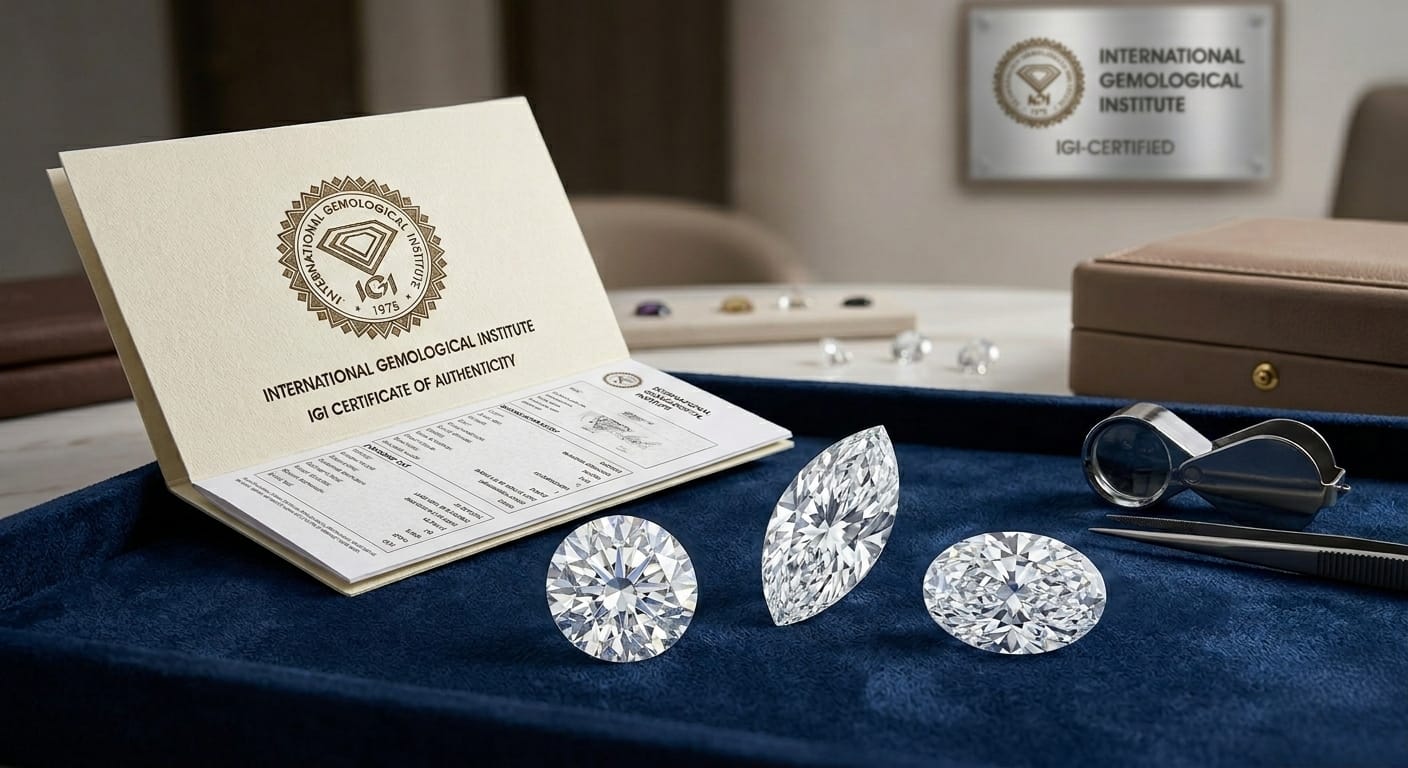
Every lab grown diamond you purchase should come with a grading report from a recognized gemological laboratory. The three main certifying bodies are:
| Laboratory | Market Position | Best For | Cost per Certificate |
|---|---|---|---|
| IGI (International Gemological Institute) | Market leader for lab grown diamonds — grades over 90% of all lab grown stones | Standard wholesale and retail inventory | Medium |
| GIA (Gemological Institute of America) | Gold standard for natural diamonds; now issues full grading reports for lab grown | Premium/high-end retail positioning | High |
| NGIC (National Gemstone Identification Center) | Chinese domestic market standard; increasingly accepted internationally | Budget-conscious market segments | Low |
For buyers, here's our honest recommendation: IGI certification provides the best balance of recognition, accuracy, and cost for most markets. GIA certification adds perceived value for premium retail — worth the extra cost if your customers recognize the GIA brand. NGIC is acceptable for price-sensitive markets but may not satisfy customers in North America or Western Europe who expect IGI or GIA reports.
Learn more in our detailed guide: IGI vs GIA Diamond Certificates: A Wholesale Buyer's Guide.
3. The 4Cs for B2B Buyers: What Actually Affects Price
Retailers teach the 4Cs to consumers. As a buyer, you need to understand which Cs actually drive wholesale pricing — and which don't.
Carat Weight
Carat weight is the single biggest price factor. Unlike natural diamonds, where prices jump exponentially at magic sizes (1.00ct, 2.00ct), lab grown polished diamonds follow a more linear but still stepped pricing curve. The 0.50ct, 1.00ct, 2.00ct, and 3.00ct thresholds each come with noticeable price-per-carat increases because larger rough crystals require longer growth cycles and have higher failure rates.
Color
For CVD diamonds, D-E-F colorless grades command 20-35% premiums over G-H near-colorless. For HPHT diamonds, the premium for colorless is smaller (10-20%) because HPHT naturally produces better color. Most buyers stock D-E-F color as their core range — lab grown diamonds naturally achieve high color grades from production, so colorless stones are consistently available at competitive prices.
Clarity
Lab grown diamonds are typically clean. VVS1-VS2 is the standard wholesale grade — inclusions are invisible to the naked eye and grading stays consistent. SI1 stones represent the best value for price-sensitive markets — they are still eye-clean in most sizes and can save 15-25% versus VS. Avoid SI2 and below for anything above 0.50 carat.
Cut
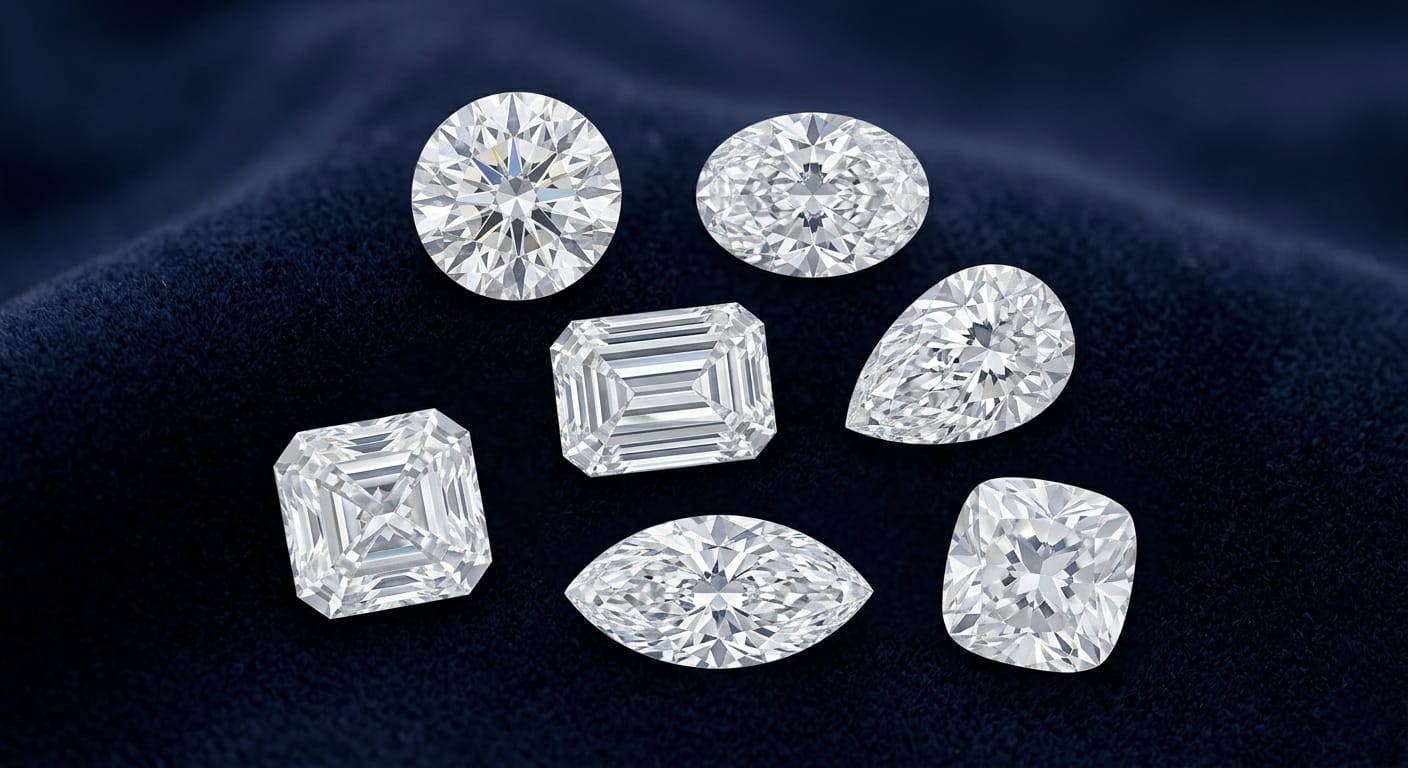
Cut quality is non-negotiable for round brilliants — always require "Excellent" or "Ideal" cut grade. A poorly cut diamond kills light performance no matter how good the other Cs are. For fancy shapes (princess, cushion, oval, emerald), cut grading is less standardized, so rely on visual inspection or request proportion data.
For a deeper dive, read: The 4Cs of Lab Grown Diamonds: A Grading Guide for B2B Buyers.
4. MOQ, Shipping, and Delivery Timeline
Minimum Order Quantity (MOQ)
Most Chinese lab grown diamond manufacturers set MOQ between $2,000–$10,000 for first orders, depending on stone size and quality. For melee sizes (under 0.10ct), MOQ is typically higher because per-unit values are lower.
Yuda Crystal is highly flexible on MOQ requirements — don't let the numbers above stop you from reaching out. Our sales team works with each buyer individually to accommodate smaller trial orders, mixed parcels, and growing businesses. Contact us to discuss your specific needs.
Shipping
FedEx, DHL, and UPS are standard for international diamond shipments.
Delivery Timeline
Expect 7-14 days from order confirmation to shipment for in-stock stones. Custom cutting or large-volume orders may take 3-6 weeks. Confirm the delivery timeline in your proforma invoice before payment.