Large Lab Grown Diamonds (3.50mm+ / 1ct+)
| Technology: HPHT/CVD | Size Range: 3.50mm+ (1ct+) |
| Color: D-I | Clarity: VVS/VS/SI |
| Cut: EX/VG/G | Carat Range: 1.00ct – 10.00ct |
| Chat on WhatsApp |
Product Specifications
| Specification | Details |
|---|---|
| Size Range | 3.50mm+ diameter; 1.00ct – 10.00ct carat weight |
| Technology | HPHT and CVD available; CVD dominates above 2ct for economic and yield advantages |
| Diamond Type | Type IIa (CVD, standard for large stones) — no measurable nitrogen or boron impurities |
| Color | D-E-F (colorless) / G-H-I (near-colorless) |
| Clarity | VVS / VS / SI (graded under 10× magnification) |
| Cut | EX / VG / G — round brilliant cut (hearts & arrows available); fancy shapes on request |
| Certification | IGI full grading report included with every stone; laser-inscribed girdle for traceability |
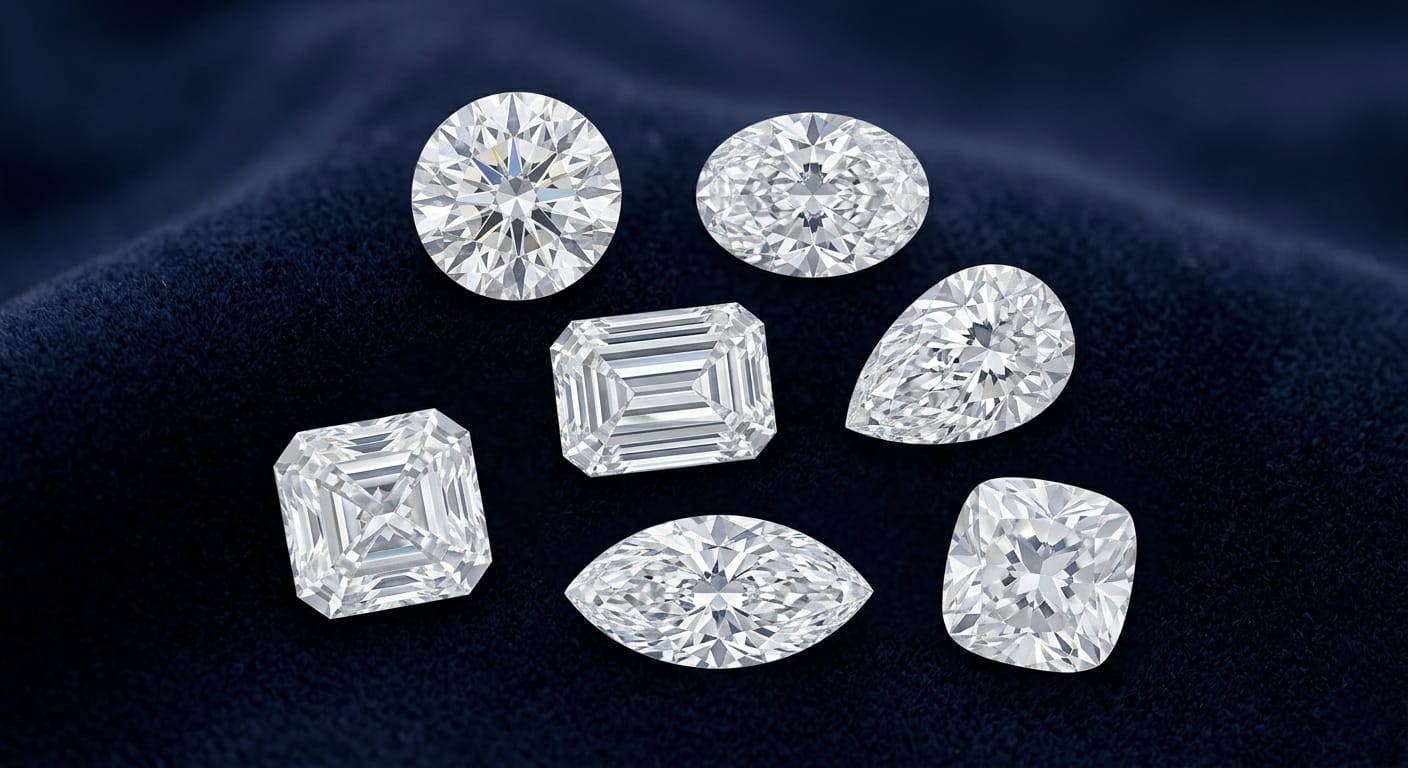
| Shape Availability | Round brilliant (standard inventory); princess, cushion, oval, emerald, pear, radiant, marquise, heart (on order) |
| Lead Time | 7–14 business days for in-stock stones; custom sourcing timelines quoted on request |
The Large Stone Category: Where Premium Value Lives
Large lab grown diamonds — defined as stones 3.50mm and above, starting at approximately 1 carat — represent the highest-value segment of the B2B diamond market. These are the diamonds that anchor premium engagement rings, headline high-end jewelry collections, and drive the most profitable transactions for jewelry retailers. While large stones account for a smaller percentage of total unit volume, they generate a disproportionate share of industry revenue and profit. A single well-sourced 2ct diamond can contribute more margin than dozens of melee parcels combined.
3.50mm+ Melee vs. 1ct+ Center Stones: An Important Distinction
Not all diamonds above 3.50mm are center stones. The 3.50-3.90mm range occupies a transitional zone where diamonds can function as either premium large melee (for high-end pavé work on luxury pieces) or entry-level center stones (the 0.75-1.00ct range). When ordering diamonds in this cross-over size, be clear about your application: center-stone quality requires stricter cut and clarity standards than melee-grade stones of the same diameter. Yuda Crystal stocks both grades and can advise on the appropriate specification for your intended use.
Why CVD Dominates the Large Stone Market
For diamonds above 1 carat, CVD technology has become the dominant production method, and for good reason. The layer-by-layer CVD growth process allows more precise control over the final crystal size, resulting in higher yields when cutting large stones. CVD diamonds consistently achieve Type IIa classification (the purest diamond type, found in only 2% of natural diamonds), which means no measurable nitrogen or boron — a verifiable quality point that commands premium positioning at retail. Additionally, CVD's scalability advantage becomes economically significant above 2 carats, where HPHT production costs rise more steeply with crystal size. For buyers sourcing 3ct+ stones, CVD is almost always the preferred technology on both quality and economic grounds.
IGI Certification: Non-Negotiable for Large Stones
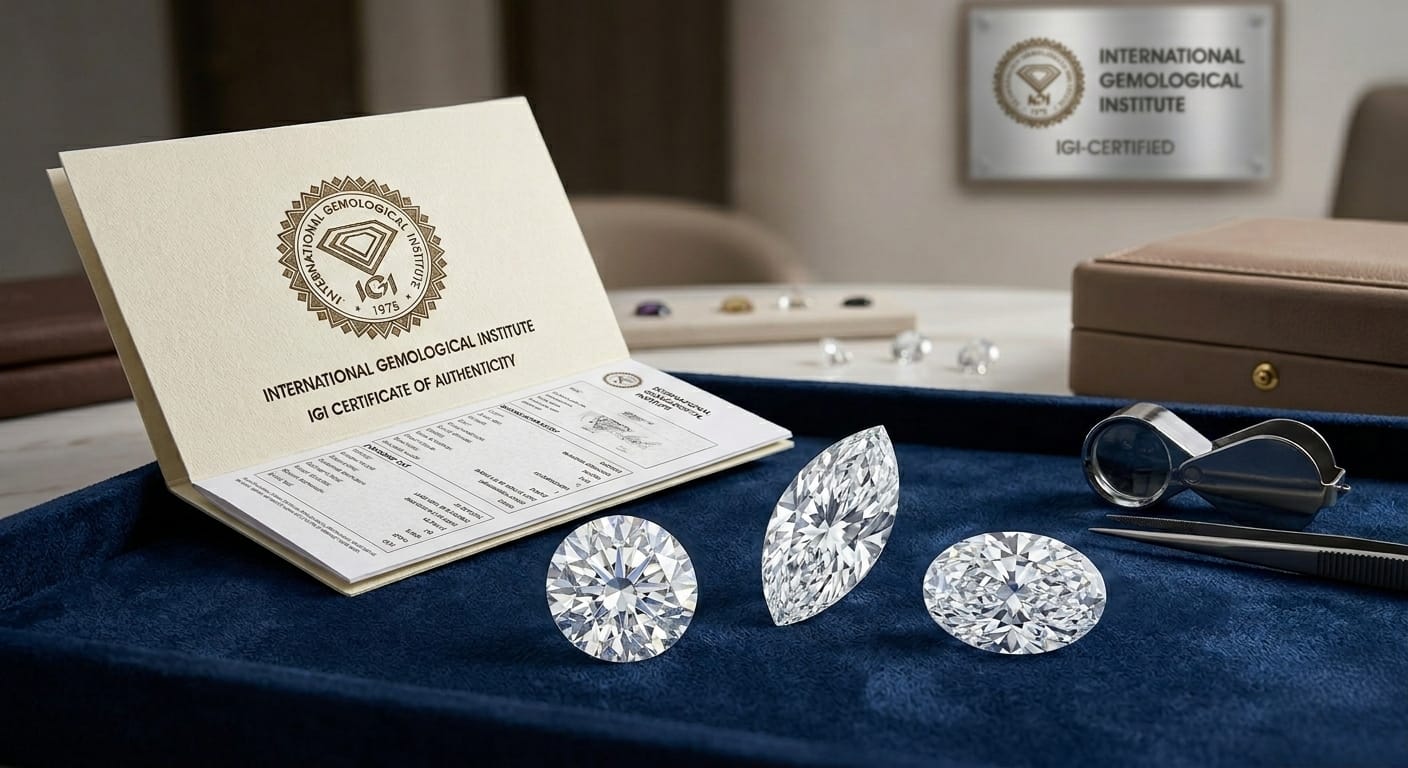
Every large diamond from Yuda Crystal ships with a full IGI grading report. For stones above 1 carat, independent certification is not optional — it is the foundation of wholesale trust and retail credibility. The IGI report verifies the diamond's carat weight, color grade, clarity grade, cut quality, fluorescence, and proportions (table %, depth %, crown angle, pavilion angle), and confirms the stone is laboratory grown with a unique laser inscription on the girdle. For B2B buyers, the IGI report eliminates quality disputes and provides a standardized reference that downstream retail customers can verify independently.
Investment-Grade and Bespoke Applications
Large lab grown diamonds are increasingly being set in investment-grade jewelry and bespoke commissions — pieces where the diamond is the primary store of value and the setting is secondary. This segment favors larger stones (2ct+) with premium grades (D-E color, VVS clarity, EX cut) that appeal to high-net-worth buyers seeking the visual impact and prestige of a large diamond without the environmental and ethical concerns associated with mined stones. The price differential between a 2ct lab grown diamond and a 2ct mined diamond of equivalent quality can be 80-90%, making the value proposition impossible to ignore.
Quality Assurance
Every large diamond undergoes individual inspection and verification before shipment:
- IGI Grading: Each stone is submitted to IGI (International Gemological Institute) for independent grading. The full report covers the 4Cs plus fluorescence, proportions, and laboratory-grown confirmation with laser inscription
- Pre-Shipment Verification: Every stone is re-inspected against its IGI report to confirm the certificate matches the physical diamond. Carat weight, color, and clarity are spot-checked under standardized conditions
- Proportion Analysis: Table %, depth %, crown angle, and pavilion angle are verified against ideal cut parameters to ensure the stone delivers the expected light performance for its cut grade
- Inclusion Mapping: Clarity characteristics are confirmed under 10× magnification to verify they match the IGI plot and do not affect structural integrity or transparency
- Secure Packaging: Each certified stone is sealed in a tamper-evident parcel with its matching IGI certificate, ready for retail presentation or direct setting
Frequently Asked Questions
What size is considered a "large" lab grown diamond?
In the B2B diamond trade, a "large" stone is generally defined as 3.50mm diameter and above, which corresponds to approximately 1 carat for a well-proportioned round brilliant cut. The large stone category extends up to 10 carats in standard wholesale inventory, with special orders available for larger sizes. The 1ct threshold is significant because it marks the point where independent certification becomes non-negotiable and where per-stone economics change dramatically — a single 2ct diamond can generate more margin than hundreds of melee stones combined.
Are all large lab grown diamonds IGI certified?
Yes. Every large diamond (1ct+) from Yuda Crystal ships with a full IGI grading report at no additional cost. The IGI report independently verifies the 4Cs, proportions, and fluorescence, and includes a laser inscription on the diamond's girdle for permanent traceability. For B2B buyers, this eliminates quality disputes and provides a standardized reference that retail customers can verify independently. Uncertified large stones introduce unnecessary risk and are not recommended for professional jewelry manufacturing or retail.
CVD vs HPHT: which is better for large diamonds?
For stones above 1 carat, CVD is the dominant and generally preferred technology. CVD's layer-by-layer growth provides more precise crystal size control — important for large-stone cutting yields. CVD diamonds consistently achieve Type IIa purity (no measurable nitrogen or boron), a verifiable premium quality point. Above 2 carats, CVD's economic advantage widens as HPHT production costs rise more steeply with crystal size. For 3ct+ sourcing, CVD is the recommended technology on both quality and economic grounds. HPHT large stones remain available for buyers who specifically prefer HPHT's growth characteristics.
What is Type IIa and why does it matter for large diamonds?
Type IIa is the purest diamond classification — diamonds with no measurable nitrogen or boron impurities in the crystal lattice. Only about 2% of natural diamonds are Type IIa (famous examples include the Cullinan and Koh-i-Noor). CVD lab grown diamonds consistently achieve Type IIa classification, meaning they are chemically purer than 98% of natural diamonds. For large stones, Type IIa purity translates to superior optical transparency — no unwanted color tints, even in D-E-F grades — which is visible to the naked eye in stones above 1 carat and becomes increasingly apparent as carat weight increases.
What shapes are available for large lab grown diamonds?
Round brilliant cut is our standard inventory shape for large stones and accounts for approximately 70% of B2B demand. Fancy shapes — princess, cushion, oval, emerald, pear, radiant, marquise, and heart — are available on order with slightly longer lead times. Cushion and oval cuts have grown significantly in popularity for engagement rings in recent years and are increasingly stocked. For premium fancy shapes (hearts & arrows round, ideal-cut cushion), we recommend discussing your specifications in advance to ensure availability.
What is the price difference between large lab grown and mined diamonds?
The price differential increases with carat weight. At 1 carat, a lab grown diamond of equivalent quality typically costs 70–85% less than a mined diamond. At 2 carats and above, the differential widens to 80–90%. This growing gap reflects the fundamental difference in supply economics: lab grown diamond production scales with technology investment, while natural diamond supply is constrained by finite mine output that decreases as existing deposits deplete. For B2B buyers, large lab grown diamonds offer a margin structure that is structurally unavailable in the mined diamond supply chain.
Please do not hesitate to contact us for large diamond pricing, current inventory above 1ct, or to discuss sourcing specific carat weights, colors, and clarities for your premium jewelry requirements.