Melee Lab Grown Diamonds (0.85-1.70mm)
| Technology: HPHT/CVD | Size Range: 0.85-1.70mm |
| Color: DEF/GH | Clarity: VVS/VS/SI |
| Cut: EX/VG/G | Typical Melee Weight: 0.005-0.08ct |
| Chat on WhatsApp |
Product Specifications
| Specification | Details |
|---|---|
| Size Range | 0.85–1.70mm diameter (≈0.005–0.08 ct per stone) |
| Sub-Categories | Fine Melee: 0.85–1.25mm | Standard Melee: 1.25–1.70mm |
| Size Tolerance | ±0.03mm (sieved and hand-verified) |
| Technology | HPHT and CVD available |
| Color | DEF (colorless) / GH (near-colorless) |
| Clarity | VVS / VS / SI (eye-clean at melee size) |
| Cut | EX / VG / G — round brilliant cut, full 57/58 facets |
| Parcel Sizes | 100 / 500 / 1,000+ stones per lot; pricing per carat |
| Packaging | Calibrated size batches, labeled with size range, color, clarity, and parcel count |
| Lead Time | 7–14 business days for standard size/quality combinations |
What Are Melee Diamonds?
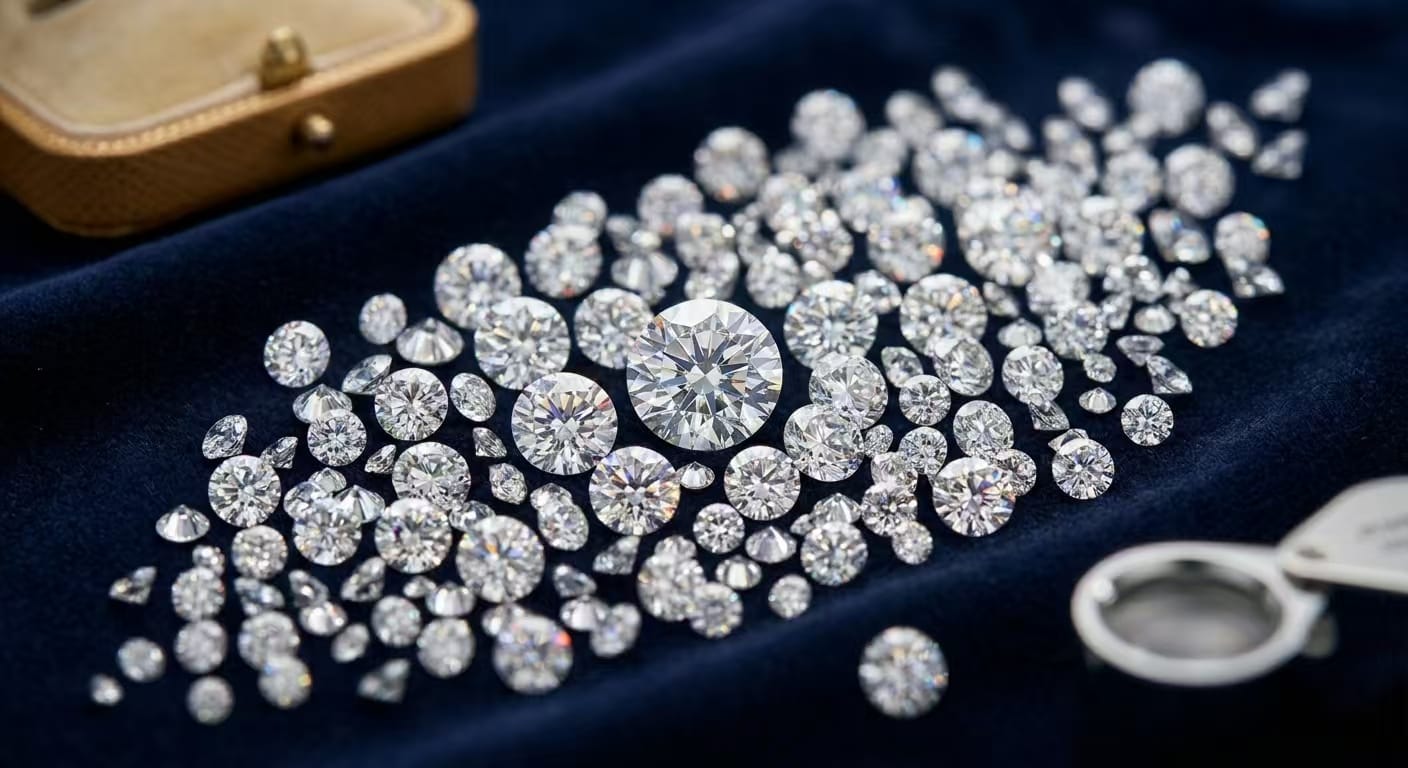
Melee (pronounced "meh-lee") refers to small diamonds typically ranging from 0.85mm to 1.70mm in diameter — roughly 0.005 to 0.08 carats each. These are the workhorses of fine jewelry: the tiny accent stones that create brilliant pavé surfaces, halo frames around center stones, and sparkling shanks on engagement rings. A single jewelry piece may incorporate dozens or even hundreds of melee diamonds, making their uniformity and consistency the single most important quality metric for B2B buyers.
Fine Melee vs. Standard Melee: Understanding the Sub-Ranges
Within the 0.85-1.70mm range, melee diamonds fall into two sub-categories with distinctly different applications:
Fine Melee (0.85-1.25mm): These are the smallest commercially viable polished diamonds, used primarily in micro-pavé and micro-pave settings where the stones are set so close together that the metal becomes nearly invisible. At this size, even a 0.05mm diameter variance between stones is visible to the trained eye. Fine melee requires the tightest sieving tolerances — typically ±0.03mm. Applications include high-end pavé bands, halo rings, and luxury watch dials.
Standard Melee (1.25-1.70mm): These slightly larger stones are used in traditional pavé settings, tennis bracelets, cluster rings, and as halo accents around center stones. The slightly larger face-up size provides more individual brilliance per stone, while still being small enough to create a continuous sparkling surface when set in rows. Standard melee accounts for the largest volume of B2B diamond parcel orders worldwide.
Why Melee Consistency Matters
When a jewelry manufacturer orders a 500-stone melee parcel, every stone must match not just in diameter but in color, clarity, and cut proportions. A single off-color stone in a pavé row creates a visible dark spot that ruins the entire setting. Yuda Crystal uses precision sieving equipment calibrated to ±0.03mm tolerance and hand-sorting under controlled lighting to ensure every melee parcel is: (1) size-uniform — every stone within the specified range, (2) color-matched — no visible color variation across the parcel, (3) cut-consistent — matching proportions for uniform light return. This triple quality control is what separates professional-grade melee from commodity-grade melee.
CVD vs HPHT for Melee: What Technology to Choose
Both CVD and HPHT technologies produce excellent melee diamonds, but they have different strengths. HPHT melee tends to have slightly warmer tones (even in DEF grades) and is the most popular choice for yellow and rose gold settings where a touch of warmth blends naturally with the metal. CVD melee delivers more consistent Type IIa colorless output across large parcel sizes, making it the preferred choice for platinum and white gold settings where absolute whiteness is critical. For mixed-metal production environments, many manufacturers stock both technologies and select based on the specific jewelry line.
Bulk Melee Purchasing: What to Expect
Melee diamonds are sold in parcels — typically 100, 500, or 1,000+ stones per lot — rather than by individual pieces. Wholesale pricing is per carat, with total parcel weight determining the invoice value. Most B2B buyers order melee in calibrated size batches (e.g., "1.30-1.40mm, DEF, VS, 200 stones") for specific jewelry production runs. Standard lead time is 7-14 business days for common size/quality combinations from Yuda Crystal's inventory.
Quality Assurance
Every melee parcel from Yuda Crystal passes through the following quality control stages before shipment:
- Precision Sieving: Stones are passed through calibrated sieves with ±0.03mm aperture tolerance, ensuring every stone in the parcel falls within the specified diameter range. Stones that do not pass are re-sorted into the appropriate size batch
- Color Grading: Parcels are sorted under standardized D65 daylight-equivalent lighting by experienced graders. Color uniformity is verified across the entire parcel — no mixed color grades within a single lot
- Clarity Screening: Stones are examined under 10× magnification to confirm all stones meet the specified clarity grade. At melee sizes, the practical requirement is eye-clean at setting distance — no visible inclusions that would detract from the pavé surface appearance
- Cut Proportion Sampling: Random sample inspection for table percentage, crown angle, and girdle uniformity to confirm consistent light performance across the parcel
- Parcel Verification: Final count and weight verification — each parcel is double-counted and weighed to confirm the invoice quantity and total carat weight
Frequently Asked Questions
What is the difference between fine melee and standard melee?
Fine melee (0.85–1.25mm) is the smallest commercially viable polished diamond size, used in micro-pavé settings where stones are set so close together that metal becomes nearly invisible. It requires the tightest size tolerances (±0.03mm). Standard melee (1.25–1.70mm) is used in traditional pavé, tennis bracelets, and halo settings — slightly larger face-up size provides more individual brilliance per stone while still creating a continuous sparkling surface. Standard melee accounts for the largest B2B parcel order volume.
How many melee diamonds come in a typical wholesale parcel?
Standard parcel sizes are 100, 500, and 1,000+ stones per lot. The most common B2B order is 200–500 stone calibrated batches at a specific size point (e.g., "1.30–1.40mm, DEF, VS, 500 stones"). Pricing is per carat — the total parcel carat weight determines the invoice value. For large-scale jewelry manufacturing, 1,000+ stone parcels offer the best per-carat economics.
CVD or HPHT: which technology is better for melee diamonds?
Both are excellent — the choice depends on your metal type. HPHT melee tends to have slightly warmer undertones that blend naturally with yellow and rose gold settings. CVD melee delivers more consistent Type IIa colorless output, making it the preferred choice for platinum and white gold where absolute whiteness is critical. Many manufacturers stock both and select per jewelry line. For mixed-metal production, CVD is the more versatile option.
What size tolerance should I expect from professional-grade melee?
Professional-grade melee should be sieved to ±0.03mm tolerance. At the fine melee level (0.85–1.25mm), this precision is critical — a 0.05mm variance between adjacent stones in a pavé row is visible to the trained eye. Yuda Crystal uses precision sieving calibrated to ±0.03mm and hand-verification to ensure every stone within a parcel is size-uniform.
What color and clarity combination is most popular for melee?
DEF/VS is the most popular melee specification for white gold and platinum jewelry — it delivers the bright white look consumers expect from pavé settings at a competitive price point. GH/SI is the most popular for yellow and rose gold settings, where the slightly warmer color is masked by the metal and the cost savings from SI clarity (still eye-clean at melee size) improve margin. For premium lines, DEF/VVS is specified to ensure zero visible inclusions even under close inspection.
Please do not hesitate to contact us for current melee diamond pricing, available size/color/quality combinations, or to discuss custom melee parcel specifications for your production requirements.