Lab Grown Diamond Manufacturing Guide: From Carbon to Polished Gem
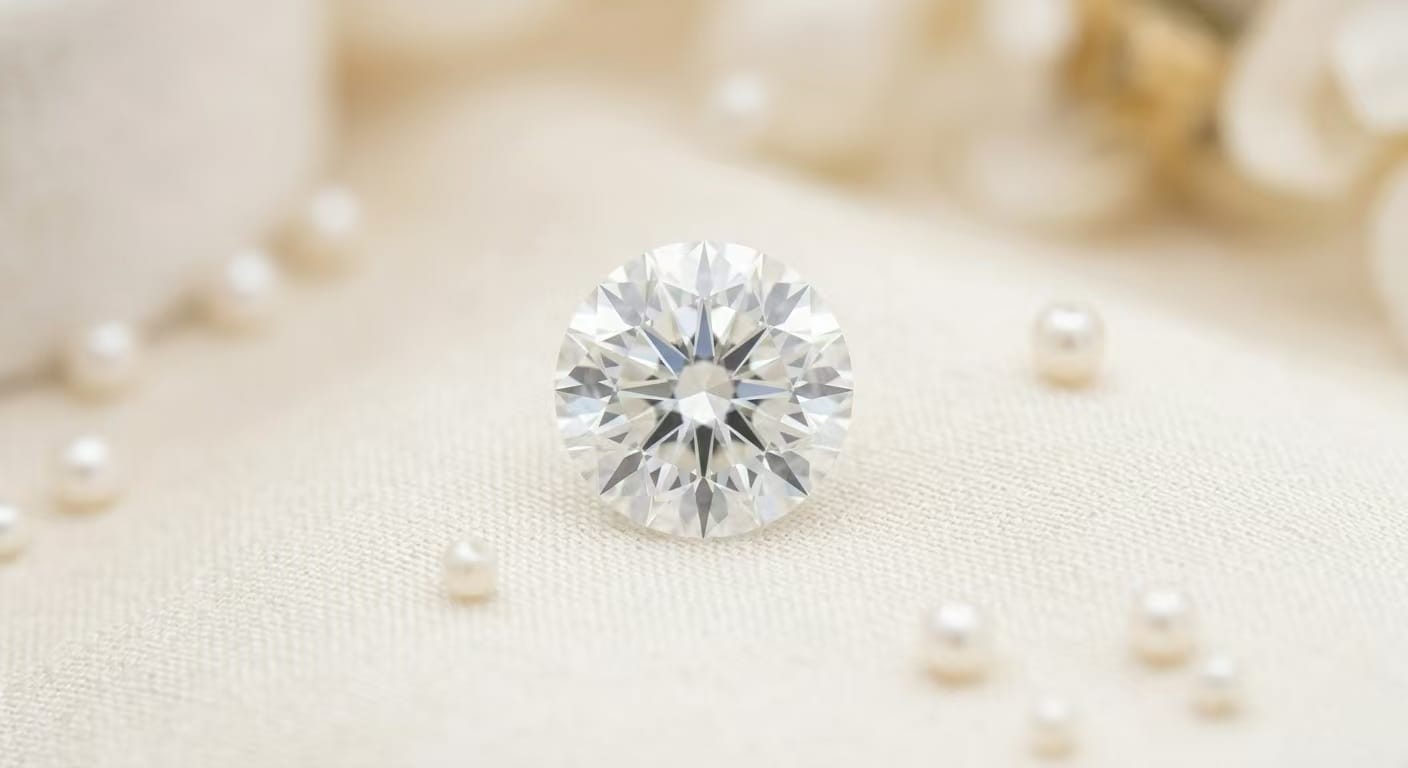
Table of Contents
- 1. What Are Lab Grown Diamonds?
- 2. HPHT Diamond Manufacturing Process
- 3. CVD Diamond Manufacturing Process
- 4. CVD vs HPHT: A Side-by-Side Comparison
- 5. From Rough to Polished: Diamond Cutting and Finishing
- 6. IGI Certification and Quality Assurance
- 7. How to Choose a Lab Grown Diamond Supplier
- 8. Yuda Crystal Supply Overview
1. What Are Lab Grown Diamonds?
Lab grown diamonds — also called laboratory-grown, man-made, or synthetic diamonds — are diamonds produced in a controlled laboratory environment rather than mined from the Earth. They are chemically, physically, and optically identical to natural diamonds. Both are crystallized carbon (C) with the same cubic crystal structure, hardness (10 on the Mohs scale), refractive index (2.42), and thermal conductivity.
This is not a new technology. General Electric produced the first verified lab-grown diamond in 1954 using the HPHT method. What has changed in the last two decades is the ability to produce gem-quality diamonds at commercially viable costs, making lab grown diamonds a mainstream option for jewelry retailers and wholesale buyers.
There are two primary manufacturing methods: HPHT (High Pressure High Temperature) and CVD (Chemical Vapor Deposition). Each has distinct advantages in terms of production cost, diamond characteristics, and ideal applications. Understanding the differences helps B2B buyers make informed sourcing decisions. For a deeper technical explanation, see our What Is Lab Grown Diamond? guide.
Key Point
Lab grown diamonds are not diamond simulants (like cubic zirconia or moissanite). They are real diamonds — the only difference is the origin of formation: laboratory vs. Earth's mantle.
2. HPHT Diamond Manufacturing Process
HPHT (High Pressure High Temperature) is the original diamond synthesis method, replicating the extreme conditions found 150-200 kilometers beneath the Earth's surface where natural diamonds form over millions of years — but compressed into a few weeks.
How HPHT Works
The HPHT process places a carbon source material (typically high-purity graphite) into a growth cell inside a large mechanical press. The press applies pressure of 5-6 GPa (roughly 50,000-60,000 times atmospheric pressure) and temperatures of 1,300-1,600°C. A metal catalyst — usually iron, nickel, or cobalt — melts and dissolves the carbon. As the cell cools under controlled conditions, carbon atoms crystallize around a small diamond seed, growing into a diamond crystal.
HPHT Equipment Types
- Cubic Press — uses six anvils applying pressure from all directions simultaneously. Most widely used in China for industrial and gem-quality production.
- Belt Press — uses two anvils within a cylindrical pressure chamber. Traditional design, still used for larger industrial crystals.
- BARS (Split-Sphere) Press — Russian-developed design using a multi-anvil spherical arrangement. Known for producing high-clarity gem diamonds.
Typical HPHT Diamond Characteristics
- Crystal shape: Cuboctahedron — a natural crystal form with both cubic and octahedral faces
- Color: Can produce colorless (D-F), near-colorless, and fancy colors (especially yellow from nitrogen, blue from boron). Some colorless HPHT diamonds may show a subtle blue nuance.
- Growth time: Several days to two weeks for gem-quality crystals
- Size range: Typically 0.30ct to 3.00ct polished for gem-quality diamonds; larger industrial crystals up to 10mm+
Learn more about the latest HPHT innovations in our article: HPHT Diamond Technology: Manufacturing Advancements.
3. CVD Diamond Manufacturing Process
CVD (Chemical Vapor Deposition) is a newer method that grows diamonds atom-by-atom in a vacuum chamber. Unlike HPHT which crushes carbon into diamond form, CVD builds diamond crystals layer by layer from a carbon-rich gas.
How CVD Works
The process starts with a thin diamond seed plate — typically sliced from an HPHT-grown crystal. This seed is placed inside a vacuum chamber and heated to 700-1,200°C. A gas mixture (methane and hydrogen) is pumped into the chamber. Microwave energy or hot filaments break the gas molecules apart, creating a carbon plasma. Carbon atoms rain down onto the diamond seed and bond to it, growing the diamond crystal one atomic layer at a time. Excess hydrogen etches away non-diamond carbon, ensuring only diamond crystal growth.
CVD Equipment Types
- Microwave Plasma CVD (MPCVD) — uses microwave energy to generate plasma. The most common method for gem-quality diamond production. Produces the highest purity diamonds.
- Hot Filament CVD (HFCVD) — uses electrically heated tungsten filaments to decompose gases. Lower equipment cost but typically used for industrial diamond films and coatings.
Typical CVD Diamond Characteristics
- Crystal shape: Tabular (flat, square or rectangular) — grows outward more than upward
- Clarity: Typically Type IIa — the purest diamond type, with extremely low nitrogen content. Often SI1 to VVS clarity as-grown.
- Color: As-grown CVD diamonds often have a brownish tint. Most undergo post-growth HPHT treatment to achieve D-F colorless grades.
- Growth time: 2-4 weeks for a gem-quality crystal, depending on target size
- Size range: Can produce very large crystals — 5.00ct to 10.00ct+ polished is achievable
For a step-by-step technical breakdown, read: How CVD Diamond Manufacturing Works: From Seed to Polished Gem.
4. CVD vs HPHT: A Side-by-Side Comparison
Both methods produce genuine diamonds, but the production process affects cost, quality, and availability. Here is how they compare for B2B sourcing decisions:
| HPHT | CVD | |
|---|---|---|
| Production method | High pressure + high temperature with metal catalyst | Carbon plasma deposition in vacuum chamber |
| Typical clarity | VS to SI — may contain small metallic inclusions from the catalyst | SI1 to VVS — fewer inclusions, Type IIa purity |
| Color range | D-F colorless, plus natural fancy colors (yellow, blue) | Usually requires post-growth treatment for D-F colorless |
| Largest available | Typically up to 3.00ct polished | 5.00ct to 10.00ct+ polished achievable |
| Production cost | Lower equipment cost, higher per-carat energy cost | Higher equipment cost, lower per-carat running cost |
| Best for | Melee, small stones, fancy colors, industrial diamonds | Large center stones, high-clarity diamonds, custom sizes |
| Growth shape | Cuboctahedron (more natural rough shape) | Tabular/flat (requires more cutting waste) |
For most B2B jewelry buyers, the method itself matters less than the final diamond quality and certification. Both HPHT and CVD diamonds that pass IGI or GIA grading are equally suitable for fine jewelry. The key is working with a supplier who sources from quality-controlled production lines. For a detailed comparison of how these methods affect purchasing decisions, see: CVD vs HPHT Diamonds: A B2B Buyer's Comparison.
5. From Rough to Polished: Diamond Cutting and Finishing
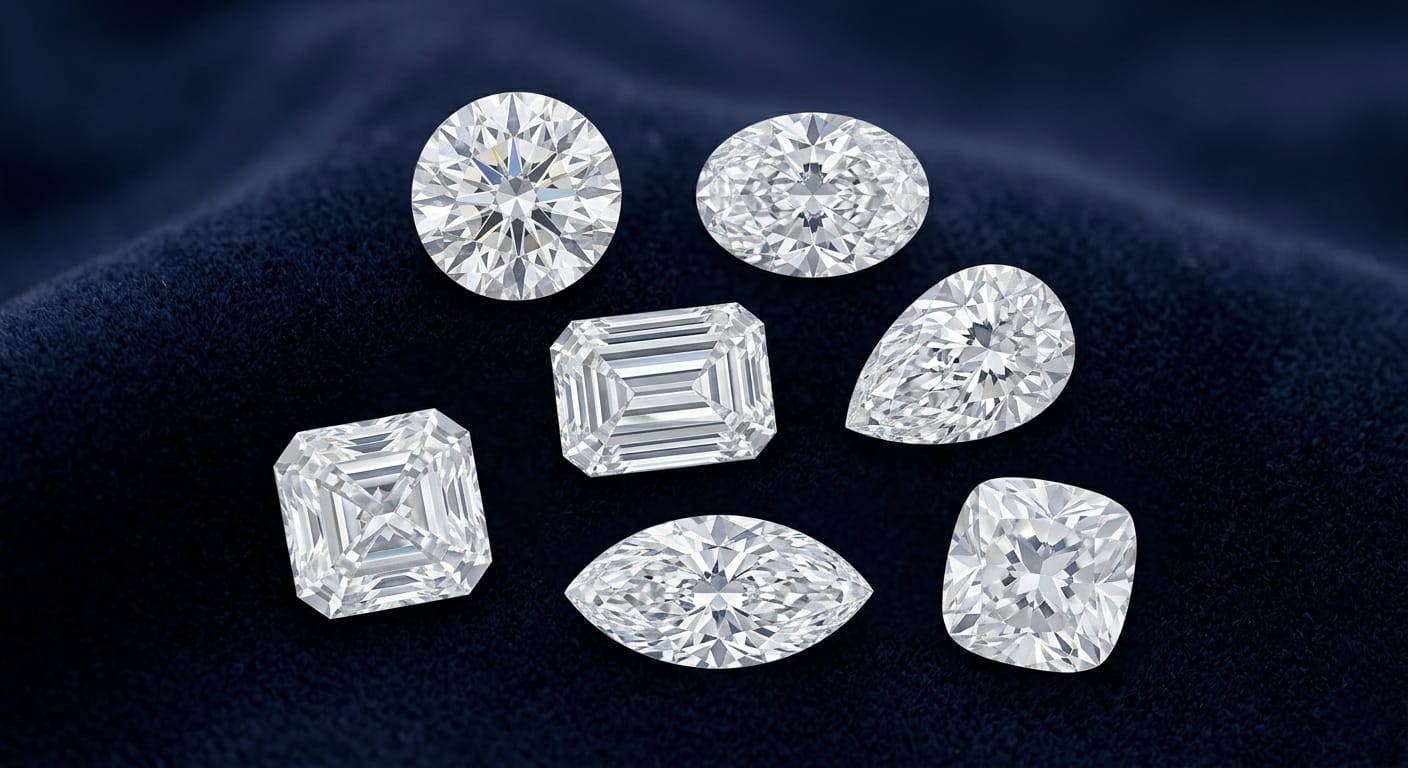
After a diamond crystal is grown — whether by HPHT or CVD — it must be cut and polished before it can be set in jewelry or sold as a loose stone. The cutting process is identical to that used for natural diamonds and follows the same standards.
Step 1: Planning and Marking
Each rough crystal is analyzed using 3D scanning or a gemologist's microscope. The planner determines how to maximize carat weight while achieving the best possible clarity and color grade. Computer-aided design (CAD) has greatly improved yield planning, particularly for CVD's tabular crystals where cutting orientation significantly affects the final diamond's appearance.
Step 2: Sawing or Laser Cutting
The rough crystal is split or cut into manageable pieces. Traditional diamond sawing uses a phosphor-bronze blade coated with diamond grit. Modern facilities increasingly use laser cutting, which offers greater precision, less waste, and faster processing — particularly important for the tabular shape of CVD crystals.
Step 3: Bruting (Girdling)
Two diamonds are mounted on spinning axles and ground against each other to shape the girdle (the outer edge). This step determines the diamond's outline — round, cushion, oval, or any other shape. For lab grown diamonds, computer-controlled bruting machines can achieve precise symmetry within microns.
Step 4: Faceting and Polishing
The diamond is mounted on a tang and pressed against a scaife — a cast-iron wheel rotating at high speed, coated with diamond powder and oil. Each facet is individually ground and polished. A standard round brilliant has 57 or 58 facets. This is the most skill-intensive step — master cutters train for years to achieve the precision required for an Excellent/Ideal cut grade.
Step 5: Final Inspection and Grading
The polished diamond is cleaned in acid and inspected under 10x magnification. Each diamond is evaluated against the 4Cs — carat, color, clarity, and cut. Diamonds that meet quality thresholds are sent to an independent laboratory for certification.
For a deeper understanding of how the 4Cs apply to B2B diamond purchasing, see: The 4Cs of Lab Grown Diamonds: A Grading Guide for B2B Buyers.
6. IGI Certification and Quality Assurance
Certification is the bridge between manufacturer and buyer — it provides an independent, verifiable assessment of each diamond's quality. For B2B buyers, certification is not optional; it is the foundation of trust in a transaction where the product may ship thousands of kilometers before being seen by the buyer.
IGI: The Standard for Lab Grown Diamonds
The International Gemological Institute (IGI) grades over 90% of the world's lab grown diamonds. Every gem-quality diamond Yuda Crystal ships is accompanied by an IGI grading report. The report documents:
- Carat weight — measured to the third decimal (e.g., 1.015ct)
- Color grade — from D (absolutely colorless) through Z
- Clarity grade — from Flawless (FL) through Included (I3), assessed under 10x magnification
- Cut grade — Excellent, Very Good, Good, Fair, Poor — based on proportions, symmetry, and polish
- Laser inscription — the report number and "LABORATORY GROWN" are typically laser-inscribed on the diamond's girdle
For a detailed comparison of certification standards, read: IGI vs GIA Diamond Certificates: A Wholesale Buyer's Guide.
7. How to Choose a Lab Grown Diamond Supplier
Selecting the right supplier is the single most important decision a B2B diamond buyer makes. It affects product consistency, delivery reliability, and ultimately your own customer satisfaction. Here are the criteria that matter most:
7.1 Specification Accuracy
The fastest way to judge a supplier is to test whether what arrives matches what was quoted. Order a small parcel against a written specification — size range, color, clarity, cut grade — then grade what you receive against it. A supplier whose delivered stones match their own paperwork on the first order will usually keep matching them. Ask for the grade written down, and hold them to it.
7.2 Supply Capacity
A supplier's monthly capacity tells you two things: can they fulfill your order volume consistently, and are they substantial enough to be reliable long-term? Capacity of 100,000+ carats per month indicates an established operation with deep stock and more than one sourcing channel behind it. Smaller capacities may mean longer lead times or inability to scale with your business.
7.3 Quality Consistency
One batch of excellent diamonds means little. You need batch-to-batch consistency. Ask about the supplier's quality control process: how is incoming stock inspected, who grades it in-house, and what happens when a stone does not match the order? Consistent suppliers can provide diamonds that match your specifications order after order.
7.4 Certification and Compliance
IGI certification is the standard for lab grown diamonds. Verify that the supplier provides IGI reports for every gem diamond. Some also offer GIA certification at additional cost. Also confirm compliance with international trade regulations — proper Kimberley Process documentation, customs declarations, and shipping insurance.
7.5 Communication and Service
B2B diamond sourcing involves technical specifications, quality negotiations, shipping logistics, and sometimes problem resolution. You need a supplier who communicates in clear English, responds promptly, and provides a single dedicated contact person who understands your account history and preferences.
7.6 Minimum Order Quantity (MOQ)
MOQ varies significantly between suppliers. Some require 100+ carats per order; others are flexible with smaller trial orders. A supplier willing to accommodate a small trial order demonstrates confidence in their stock and respect for the buyer's due diligence process.
For a comprehensive sourcing framework, see: Lab Grown Diamond Wholesale Buying Guide for Jewelry Retailers.
8. Yuda Crystal Supply Overview
Henan Yuda Crystal Co., Ltd., founded in 2016 and headquartered in Zhengzhou, Henan, China, is a lab grown diamond supplier serving jewelry retailers, diamond wholesalers, and industrial buyers in over 30 countries.
Our supply operations include:
- HPHT lab grown diamonds with bulk monthly supply capacity for sawing and cutting-grade diamonds
- CVD diamond supply, offering both HPHT and CVD options
- IGI certification for every gem-quality diamond shipped
Our products span the full spectrum — from IGI certified gem diamonds for jewelry retailers, to diamond powder for industrial applications.
Learn more about our company on the About Us page, or browse our diamond inventory with real-time pricing.
Looking for a Reliable Diamond Supplier?
Contact our team to discuss your requirements or request samples. We ship to 30+ countries with full IGI certification and dedicated account support. Get in touch.