CVD vs HPHT Diamonds: A B2B Buyer's Complete Comparison
Every B2B diamond buyer eventually faces this question: CVD or HPHT? The two manufacturing methods produce gem-quality lab grown diamonds that are chemically identical, but they differ in growth process, typical inclusions, color characteristics, and — most importantly for your business — cost and market positioning.
This guide gives you an honest, data-driven comparison from a supplier that stocks both types. No marketing fluff — just what you need to make profitable buying decisions.
Table of Contents
1. How Each Method Works
CVD (Chemical Vapor Deposition)
A thin diamond seed plate is placed in a vacuum chamber filled with carbon-rich gas (typically methane and hydrogen). Microwaves heat the gas to over 1,000°C, breaking apart the molecules. Carbon atoms rain down onto the seed, building diamond layer by atomic layer. Growth takes 2-4 weeks depending on target size. CVD consistently produces Type IIa diamonds — the chemically purest type with negligible nitrogen impurities. GIA documents both growth processes in detail in its overview of HPHT and CVD diamond growth.
HPHT (High Pressure High Temperature)
A small diamond seed is placed in a metal catalyst (usually iron-nickel) inside a massive press. The press applies 50,000-70,000 atmospheres of pressure at 1,300-1,600°C — replicating the conditions 150km below the earth's surface. The carbon dissolved in the molten metal catalyst crystallizes onto the seed. Growth takes days to weeks. HPHT produces Type Ib or Type IIa diamonds depending on whether nitrogen getters (like aluminum or titanium) are used. Our HPHT lab grown diamonds are graded and certified to the same standard.
Key Point for Buyers
Both methods produce gem-quality stones indistinguishable from mined diamonds without specialized equipment. For your customer, the difference is academic. For your purchasing strategy, the difference matters — we supply both, with specifications listed on our CVD and HPHT product pages.
2. Quality Comparison: Color, Clarity, and Cut
| Attribute | CVD | HPHT |
|---|---|---|
| As-grown color | Brownish or grayish undertone; requires post-growth HPHT treatment to achieve D-J colorless | Typically yellowish; controlled via nitrogen getter; better natural color in D-F range without treatment |
| Post-growth treatment | Almost always HPHT-treated (standard, accepted practice) | Rarely treated; as-grown color is generally good |
| Typical clarity | VS1-VVS2; internal graining and pinpoint inclusions possible | VS1-VVS1; metallic flux inclusions possible |
| Cut quality | Same cutting process for both types; cut quality depends on the cutting house, not the growth method | Same as CVD |
| Fluorescence | Rare; typically none | Occasional strong blue fluorescence (can be a selling point or a drawback depending on market) |
| Phosphorescence | Occasional orange afterglow under UV (inform customer if present) | Rare |
3. Inclusions: What Your Customers Might See
Here's the practical distinction that affects returns and customer satisfaction:
- CVD inclusions: Typically small dark pinpoint inclusions or wispy internal graining. Under 10x magnification they look like tiny dust particles. In SI1 and above, they are invisible to the naked eye.
- HPHT inclusions: Most commonly metallic flux inclusions — tiny specks of the iron-nickel catalyst trapped during growth. These can be magnetic (a jeweler's magnet will attract the stone slightly). In well-grown HPHT, these are microscopic and irrelevant. In poorly grown HPHT, they can be visible as black specks under a loupe.
Bottom line for B2B: At VS clarity and above, neither type has visible inclusions. At SI clarity, CVD's pinpoint inclusions are generally less noticeable than HPHT's metallic specks. For budget-conscious market segments stocking SI stones, CVD has a slight edge in visual appearance.
4. Cost and Availability by Size
As of mid-2026, here is the practical wholesale reality:
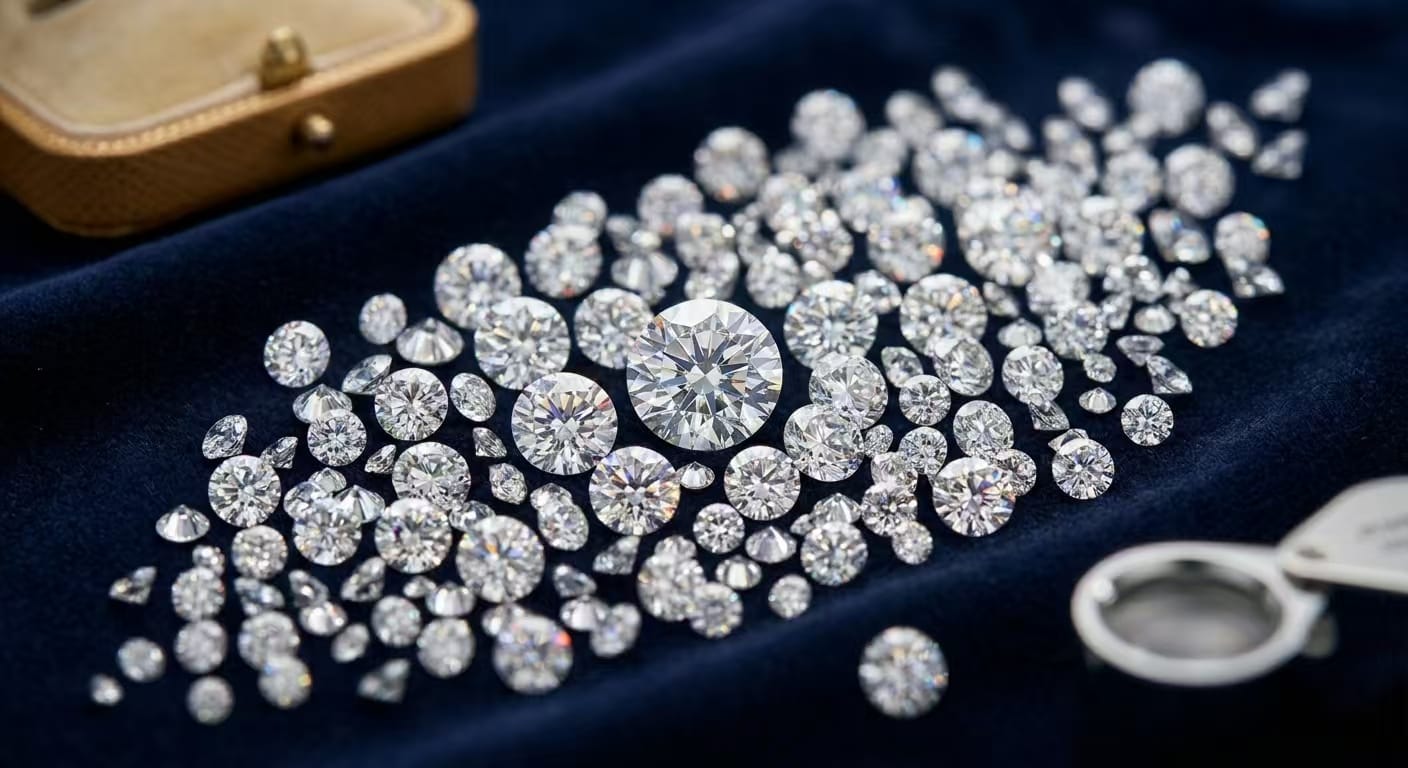
- Melee (0.01-0.10ct): HPHT dominates. HPHT melee is 15-25% cheaper than CVD melee because the HPHT process is more efficient for small sizes. If you stock pavé or micro-pavé jewelry, buy HPHT melee.
- Center stones (0.30-1.50ct): CVD and HPHT are competitive. CVD is slightly cheaper (5-10%) in this range due to higher production volumes from major Chinese manufacturers. CVD is the default choice for most buyers in this bracket.
- Large stones (2.00-5.00+ct): CVD has a clear advantage. The CVD process scales better to larger sizes, and CVD-grown Type IIa stones in 3+ carats are more readily available than HPHT equivalents. Expect a 10-20% premium for HPHT in this range.
- Fancy colors: HPHT is the clear winner. HPHT naturally produces yellow (nitrogen-rich) and blue (boron-doped) diamonds. CVD fancy colors require post-growth irradiation and annealing, adding cost and complexity.
5. Which Type Sells Better in Which Market
Based on wholesale order data from our customers in 30+ countries:
- North America: CVD dominates (~70% of orders). American consumers respond to the "Type IIa purity" message and the technology-forward narrative of CVD. Most major US lab diamond brands are CVD-focused.
- Europe: Mixed, leaning HPHT (~55%). European buyers are more traditional and appreciate HPHT's closer resemblance to natural diamond formation. ESG-conscious markets (Scandinavia, Germany) slightly prefer CVD.
- Middle East: HPHT preferred (~65%). Preference for the perceived "authenticity" of HPHT's geological simulation process.
- Asia-Pacific: CVD dominant (~80%). Price sensitivity drives preference for CVD's slightly lower cost in the 0.30-1.50ct range.
- Fancy color niche: HPHT is essentially the only choice for natural-looking fancy yellows and blues.
6. B2B Buying Recommendation by Use Case
| Your Business | Recommended Type | Why |
|---|---|---|
| Engagement ring retailer (0.50-2.00ct, D-H, VS+) | CVD | Best availability, competitive pricing, Type IIa purity story resonates with consumers |
| Fashion jewelry brand (melee-heavy, pavé settings) | HPHT | 15-25% cheaper for melee sizes; better natural color consistency in small stones |
| High-end bespoke jeweler (2.00ct+, D-F, VVS+) | Either, prioritize quality | Both types produce superb large stones; buy the best stone regardless of method |
| Colored diamond specialist | HPHT | Natural-looking fancy colors without post-treatment; more consistent color saturation |
| Budget/price-sensitive retailer (SI clarity, G-H color) | CVD | CVD SI stones tend to have less visible inclusions than HPHT SI; slightly lower wholesale cost |
| Diversified multi-market retailer | Both — 70/30 CVD/HPHT mix | Covers all customer preferences; gives your sales team talking points for both technologies |
Whichever type you buy, every stone we ship is IGI certified and QC-verified before dispatch. For a deeper understanding of pricing across both types, read our companion guide: Lab Grown Diamond Wholesale Pricing and Margin Analysis.