Lab Diamond Melee Buying Guide for Manufacturers
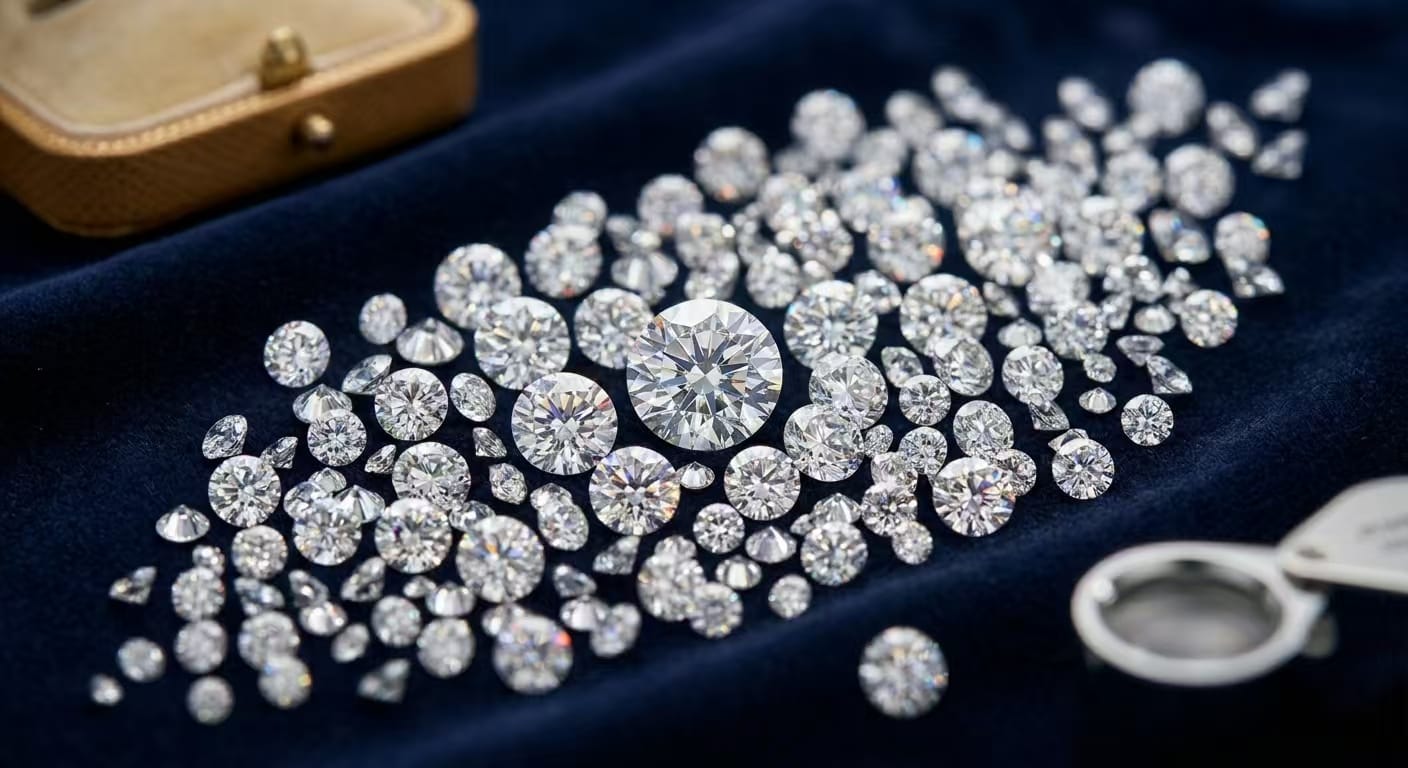
Melee — small diamonds typically under 0.18 carats — are the unsung workhorses of jewelry manufacturing. Pave settings, halo rings, eternity bands, tennis bracelets, and accent stones all depend on consistent, well-graded melee. A single poorly matched stone in a pave setting draws the eye and cheapens an otherwise well-made piece.
For jewelry manufacturers, sourcing lab grown diamond melee that is consistently sized, well-matched in color, and properly graded saves hours of sorting and reduces waste. This guide covers what manufacturers need to know when buying melee.
Table of Contents
1. Melee Size Ranges and Terminology
Melee diamonds are categorized by diameter in millimeters, which corresponds to approximate carat weight:
| Size Name | Diameter (mm) | Approx. Carat Weight | Typical Use |
|---|---|---|---|
| Micro melee | 0.6-0.9mm | 0.001-0.004ct | Micro-pave, hidden halos, delicate accents |
| Small melee | 1.0-1.3mm | 0.005-0.01ct | Pave bands, halo settings |
| Standard melee | 1.4-1.7mm | 0.01-0.02ct | Eternity bands, shared-prong settings |
| Large melee | 1.8-2.2mm | 0.03-0.05ct | Channel-set bands, three-stone ring side stones |
| Accent stones | 2.3-3.0mm | 0.06-0.10ct | Tennis bracelets, prominent side stones |
| Small center | 3.0mm+ | 0.10-0.18ct | Pendant center, small ring center, cluster pieces |
Buying tip: Specify size tolerance when ordering. A "$1.5mm melee" order without tolerance might arrive with stones ranging from 1.3mm to 1.7mm — enough variation to cause setting problems. Standard tolerance for quality melee is +0.1mm. Tighter tolerance (+0.05mm) is available at a premium and is worth the cost for micro-pave work where precision is critical.
2. How Melee Is Graded
Melee grading is less precise than grading for center stones because individual certification for each small stone is economically impractical. Instead, melee is typically sold by grade range, following the standards set by IGI, the dominant certification lab for lab grown diamonds:
| Attribute | Common Grade Designations | What to Expect |
|---|---|---|
| Color | D-F, G-H, I-J (by parcel) | A "D-F melee parcel" means all stones fall within that range. Some variation within the range is normal. |
| Clarity | VS+, SI+ (by parcel) | Most lab grown melee grades VS or better naturally. SI-grade melee should still be eye-clean at melee sizes. |
| Cut | Full cut (57-58 facets) vs single cut (17-18 facets) | Full cut is standard for quality jewelry. Single cut is used for very small micro melee (<0.8mm) where full faceting is impractical. |
Lab grown advantage for melee: Lab grown melee in D-F color, VS+ clarity is consistently available because the production process naturally yields high-color, high-clarity rough suitable for small stones. Unlike natural melee — where D-F VS+ can be scarce and expensive — lab grown melee in top grades is the standard, not a premium upgrade.
3. Packaging and Delivery Formats
How melee is packed affects how efficiently your setting team can work:
- Bulk parcel. All stones in one container, sorted by size. Most cost-effective, but requires in-house sorting before setting.
- Pre-sorted by tolerance. Stones are sorted into sub-parcels by exact diameter within the tolerance range. Saves setting labor but adds a sorting charge (typically 3-5% premium).
- Calibrated plates. Stones are pre-set onto adhesive plates in the exact layout for a specific jewelry piece. Highest convenience, most expensive format. Common for high-volume production runs of the same design.
4. Quality Checks for Melee Orders
When you receive a melee order, check these before sending stones to the setting bench:
- Size consistency. Pull a random sample of 20 stones and check diameter with a caliper or sieve. More than 10% outside the specified tolerance range is a reason to flag the order.
- Color matching. Spread stones on a white tray and check for color outliers. A single noticeably yellow stone in a D-F parcel stands out and should be returned.
- Breakage check. Melee stones are fragile. Check for chipped girdles, broken culets, and incomplete cuts. Standard acceptable breakage is under 2%. Anything more warrants a conversation with the supplier.
- Count verification. Weigh the parcel and compare to expected total carat weight. Count by machine if available. A parcel that is significantly under count is a supply issue.
Larger sizes in the same family are covered by our accent stones range (1.70–2.60mm), and our melee is available as bulk parcels or pre-sorted by tolerance. Jewelry retailers building a full inventory can review our wholesale program for retailers.