How CVD Diamond Manufacturing Works: From Seed to Polished Gem
If you're buying CVD diamonds for your jewelry business, understanding how they're made isn't just technical curiosity — it helps you evaluate suppliers, spot quality issues, and answer customer questions with authority. This guide walks through the entire CVD process, from a tiny diamond seed to a finished polished gem ready for retail.
Table of Contents
1. What CVD Actually Means
CVD stands for Chemical Vapor Deposition. Unlike HPHT, which uses mechanical force to replicate earth's geology, CVD grows diamonds through a controlled chemical reaction in a vacuum chamber. Think of it as "3D printing" diamond at the atomic level — carbon atoms are deposited layer by layer onto a diamond seed plate.
The result is a Type IIa diamond — the purest classification, containing negligible nitrogen impurities. Only about 2% of natural diamonds are Type IIa; virtually all CVD diamonds are.
2. Step 1: Diamond Seed Preparation
Every CVD diamond starts with a diamond seed plate — a thin, flat slice of existing diamond, typically 5×5 mm to 10×10 mm and about 0.3 mm thick. The seed determines the crystal orientation of the new diamond. Most manufacturers use a (100) crystallographic orientation because it produces the smoothest growth surface.
Seed preparation is critical. The seed surface must be atomically clean — any contamination or surface damage will propagate as defects into the growing crystal. Seeds are cleaned in a series of acid baths (sulfuric and nitric acid), polished to remove surface damage from the previous cut, and inspected under high-power microscopes before entering the reactor.
3. Step 2: The Growth Process
The prepared seed is placed inside a plasma-enhanced CVD reactor. Here's what happens:
The Gas Mixture
The reactor chamber is filled with a precise mixture of gases: methane (CH₄) as the carbon source, and hydrogen (H₂) in roughly a 1:99 ratio. Trace amounts of nitrogen or other dopants may be added to control growth rate and crystal properties.
Microwave Plasma Ignition
High-power microwaves (typically 2.45 GHz, the same frequency as a microwave oven but at 6-15 kW industrial scale) are directed into the chamber. The microwave energy strips electrons from the gas molecules, creating a plasma ball — a superheated, electrically charged gas glowing at over 1,000°C.
Atomic Carbon Deposition
Inside the plasma, methane molecules break apart into carbon atoms and hydrogen atoms. The hydrogen plays a crucial role — it etches away any non-diamond carbon (graphite) that tries to form, ensuring only diamond crystal structure grows. Carbon atoms rain down onto the seed plate and bond into the diamond lattice, building up the crystal one atomic layer at a time.
Growth Duration
A 1-carat crystal typically requires 2-4 weeks of continuous growth. The chamber runs 24/7 — any interruption in power or gas flow can create a boundary layer defect in the crystal. Modern reactors can grow multiple seeds simultaneously, with some premium reactors handling 20-40 seeds per run.
4. Step 3: Post-Growth Treatment
When the crystal comes out of the reactor, it's typically a brownish or grayish color. This is because CVD growth creates some single-atom nitrogen vacancies that absorb light in the visible spectrum. The solution is post-growth HPHT treatment:
- The rough CVD crystal is placed in an HPHT press at 1,500-2,000°C and 50,000+ atmospheres for 10-60 minutes.
- The extreme conditions cause the nitrogen atoms to migrate and the vacancy clusters to dissolve, removing the brown tint.
- The result: a D-J colorless diamond crystal, structurally unchanged but optically improved.
This treatment is standard industry practice and permanent. It does not affect the diamond's certification as a lab grown diamond. If your customer asks, the correct answer is: "Yes, it has been treated to improve color, just like virtually all gemstones on the market. The treatment is permanent and fully disclosed."
5. Step 4: Cutting and Polishing
The treated rough CVD crystal goes to the cutting house. CVD rough crystals are typically cubic or tabular in shape (unlike HPHT rough, which tends toward cuboctahedral). This affects yield:
- Round brilliants: CVD rough yields approximately 30-35% for a well-cut round — slightly lower than HPHT rough (35-40%) because the tabular shape is less efficient for round cutting.
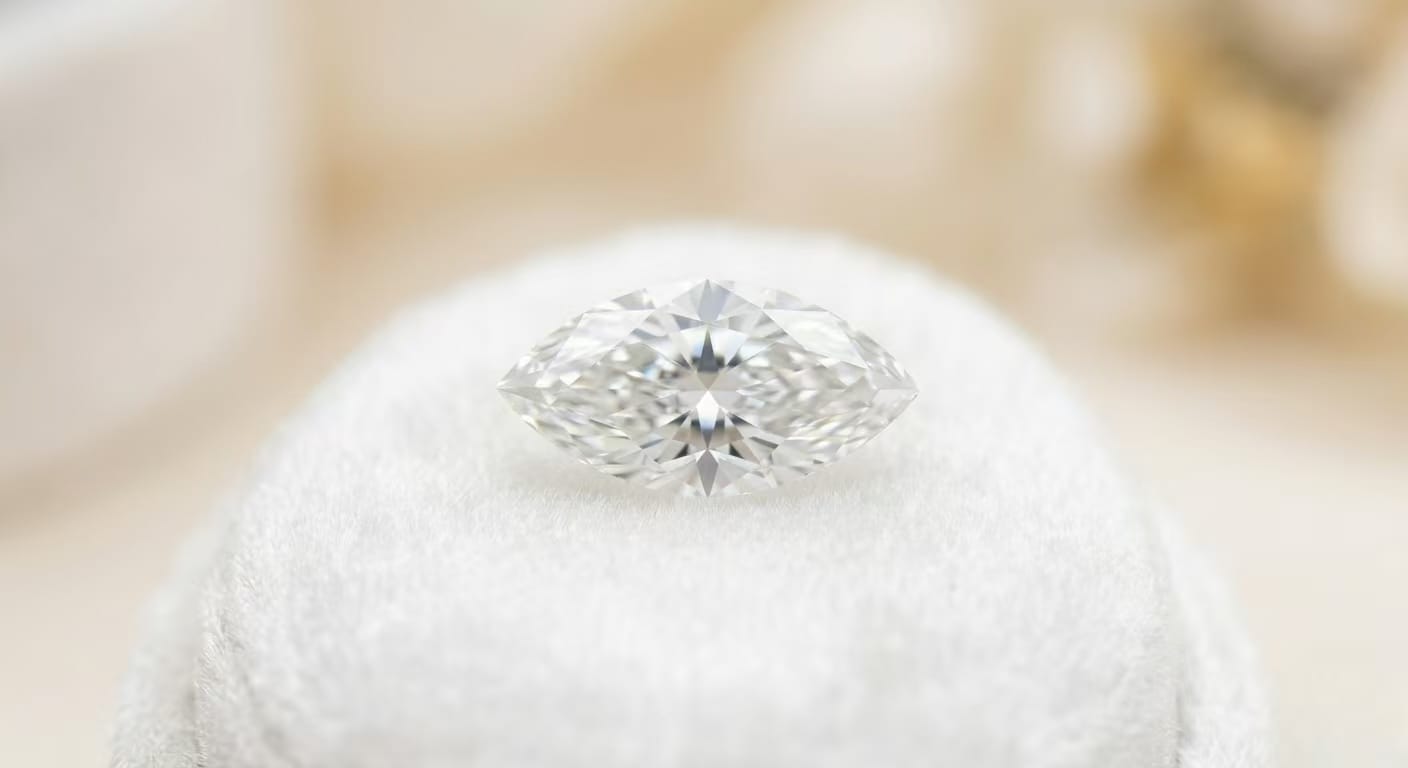
- Fancy shapes: CVD rough is actually better for fancy shapes (princess, emerald, cushion) because the tabular shape matches square and rectangular cuts more naturally. Yield can reach 40-50% for princess cuts from CVD.
Cutting is done on automated CNC laser cutting machines and polished on diamond-encrusted scaife wheels — the same equipment used for natural diamonds. Most lab diamond cutting happens in Surat, India, the global diamond cutting hub.
6. Step 5: Grading and Quality Control
After polishing, every stone passes through multiple quality gates:
- Visual inspection under 10x magnification for surface defects, polish lines, and inclusions.
- Color grading against master stones in a controlled lighting environment (D65 daylight equivalent).
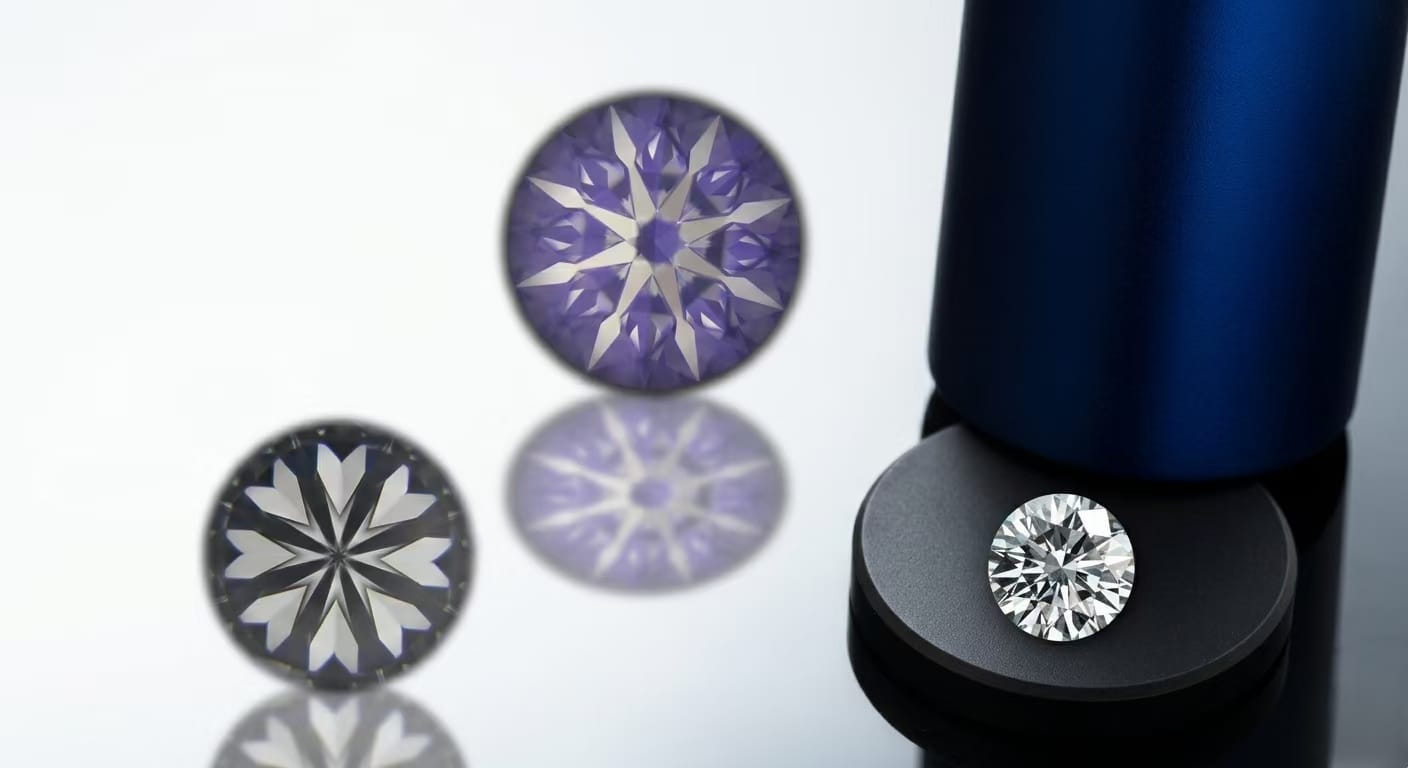
- Measurement on a Sarine or OGI optical scanner for proportions, symmetry, and light performance.
- Phosphorescence check under UV light — some CVD stones exhibit a brief orange afterglow, which should be noted if present.
- Certification submission to IGI, GIA, or NGIC for independent grading report.
Stones that fail QC at any stage are either re-cut to remove defects or sold into the industrial diamond market for cutting tools and abrasives.
7. Production Timeline and Scale
A typical CVD diamond takes 6-10 weeks from seed preparation to certified polished stone, broken down as:
| Stage | Duration |
|---|---|
| Seed preparation and loading | 1-2 days |
| CVD growth | 2-4 weeks |
| Post-growth HPHT treatment | 1-3 days (including cooling) |
| Laser cutting and polishing | 2-3 weeks |
| Grading and certification | 1-2 weeks (depends on lab backlog) |
Yuda Crystal supplies CVD lab grown diamonds in volume — Type IIa material across melee to large sizes, every gem stone IGI certified and shipped from our Zhengzhou warehouse.